Why Involving Others in Your Marriage Can Do More Harm Than Good
A daily routine that feels completely harmless on the surface, but is quietly acting like slow poison on modern marriages. Understanding the boundaries of privacy.

Saleha Bint Abood Al Amoodi
Contributor
In this article · 4 sections
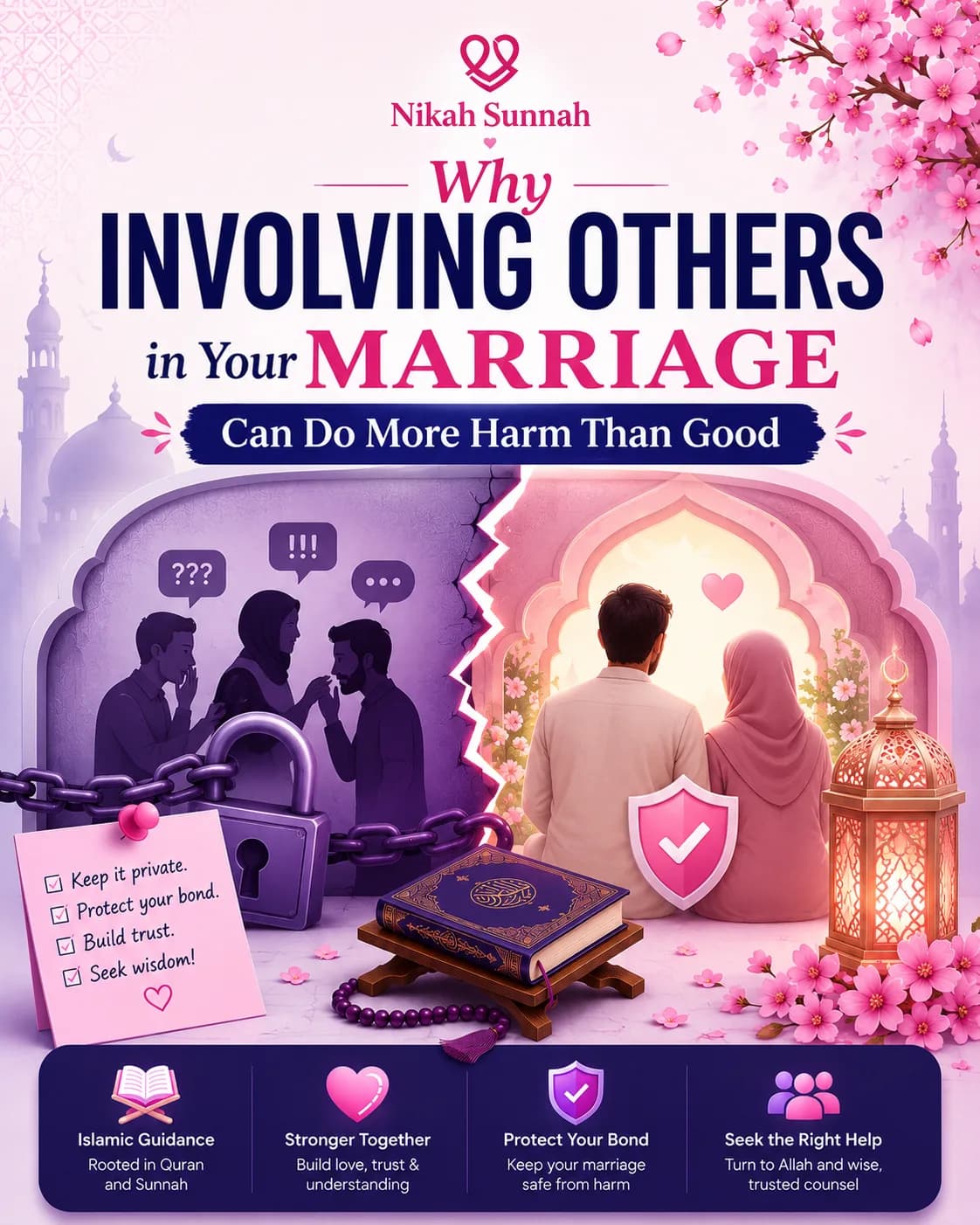
A minor argument happens. Maybe he was short with you before leaving for work. Maybe there was a disagreement about money, or something to do with his family. Nothing serious just the kind of friction that is completely normal when two people are learning to share a life. But within the hour, the phone is out.
Your mother gets the full debrief. Your sister gets the WhatsApp voice note. Your best friend gets the condensed version. By the time you've done your rounds, the argument has been narrated, analyzed, and judged by at least three people who weren't in the room. That evening, your husband comes home, apologizes, and you move on. You genuinely have. For you, it's over. But it's not over for your mother.
She didn't have the reconciliation. She didn't see him apologize. She only received your version; filtered through your frustration, at the peak of your anger. And that version has now settled inside her. She files it. Stacks it alongside every other story you've told her over the months. And slowly, a picture forms in her mind; a picture of your husband that has almost nothing to do with who he actually is on an ordinary Tuesday evening in your home. This is why learning the foundational marriage rules / rights regarding privacy is so critical before entering a home.
01. The Daily Routine of Slow Poison#
The next family gathering, she says something sharp to him. He feels it. He doesn't understand why your family treats him with a certain coldness. You don't connect it back to the calls. And a wall goes up quietly, invisibly between your husband and your family. A wall you built, one phone call at a time.
02. What the Sunnah Says About Spreading Secrets#
That hadith goes both directions. Spreading what happens between a husband and wife their arguments, their private struggles, their rough moments is not a casual act in the sight of Allah. The trust that lives inside a marriage is not yours to pass on to a third party, however close they are to you. This is an essential pillar of maintaining true choices.
We don't think of it this way. In our families especially, closeness with a mother or sister has been stretched to mean total access; no limits, everything shared. If you don't tell your mum what's happening in your marriage, it gets read as distance. As hiding something.
But the Qur’an describes the husband and wife as garments for one another:
A garment covers. It protects what is underneath from being seen by those who have no right to see it. When you hand that garment to outsiders, you are removing a protection that belongs to your marriage. And when you speak about your spouse's faults to someone else, you have entered the territory of gheebah. The Prophet ﷺ defined:
Whether it's said to your mother or your closest friend, whether said in frustration or as a normal daily update if he would dislike it being said, it counts. If it then gets passed along your mother mentions it to your aunt, your sister tells your cousin it has become nameemah, tale-carrying.
These are not abstract categories. They are named sins. And they are playing out in ordinary homes every single day, dressed up as normal conversation within an muslim marriage
03. The Reality of Reactive Advice#
There's something else worth being honest about the advice that comes back when you vent. It is almost never rooted in wisdom. What you receive is reactive, emotional, and shaped by the other person's own history and wounds. The friend who has had a difficult relationship will tell you to stand your ground. Your mother, who has spent a lifetime protecting you, will instinctively take your side which feels comforting in the moment and does real damage over time.
Nobody in that phone call is asking you what your role was. Nobody is helping you think about how to repair things with your husband. They are affirming your frustration. And frustration, when it is fed and affirmed repeatedly, grows into something much harder to shift. This is why a lot of relationships fail. Your marriage ends up being steered not by two people and their Creator, but by a committee of outsiders who carry none of the consequences of where it goes.
04. When to Speak and When to Guard#
Now and this cannot be left unsaid none of this means suffering quietly through real harm.
If there is violence, emotional abuse, rights being withheld, you speak. You involve your wali. You seek help from someone with the knowledge and standing to intervene properly. Silence in the face of genuine oppression is not patience. But there is an enormous difference between a husband who was irritable before work and a husband who is actively harming you.
The ordinary friction of marriage, the rough morning, the insensitive comment, the disagreement, belongs inside your home. You deal with it through a direct, honest conversation with your husband. Not a debrief with someone who isn't in the marriage.
Written by
Saleha Bint Abood Al Amoodi
Contributor
Involved in da'wah, study circles, and family counselling, with formal training in Islamic studies and ijazah in hadith. Contributes articles on marriage, personal development, and family life.
Marriage upon the Sunnah.
Without the noise.
Join families and seekers walking the same path. Verified profiles, wali-first, built around the Book and the Sunnah, not endless swiping.
No swiping · Wali-first · Free to register
More from the Sanctuary
Deeper guidance on the path to a Sunnah-rooted marriage.
Practical Guide
Background Checks Before Marriage in Islam: A Guide to Choosing the Right Spouse
What you are not checking on a marriage biodata format for Muslim seekers, but should. How to look past the formal living room behaviour.
Practical Guide
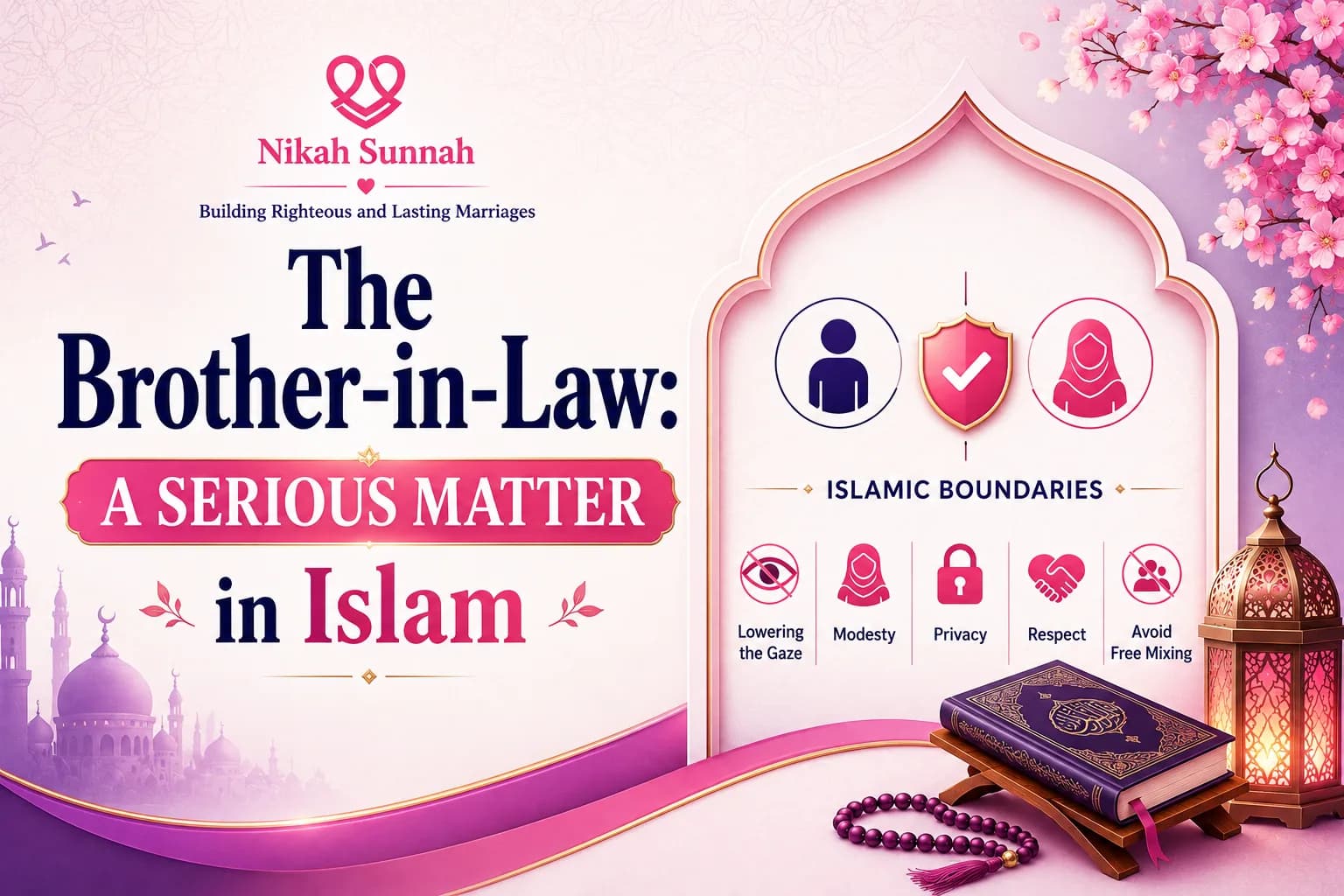
Brother-in-Law in Islam: Understanding Islamic Boundaries and Etiquette
"Treat him like your own brother." The "him" being the husband's brother.
Practical Guide
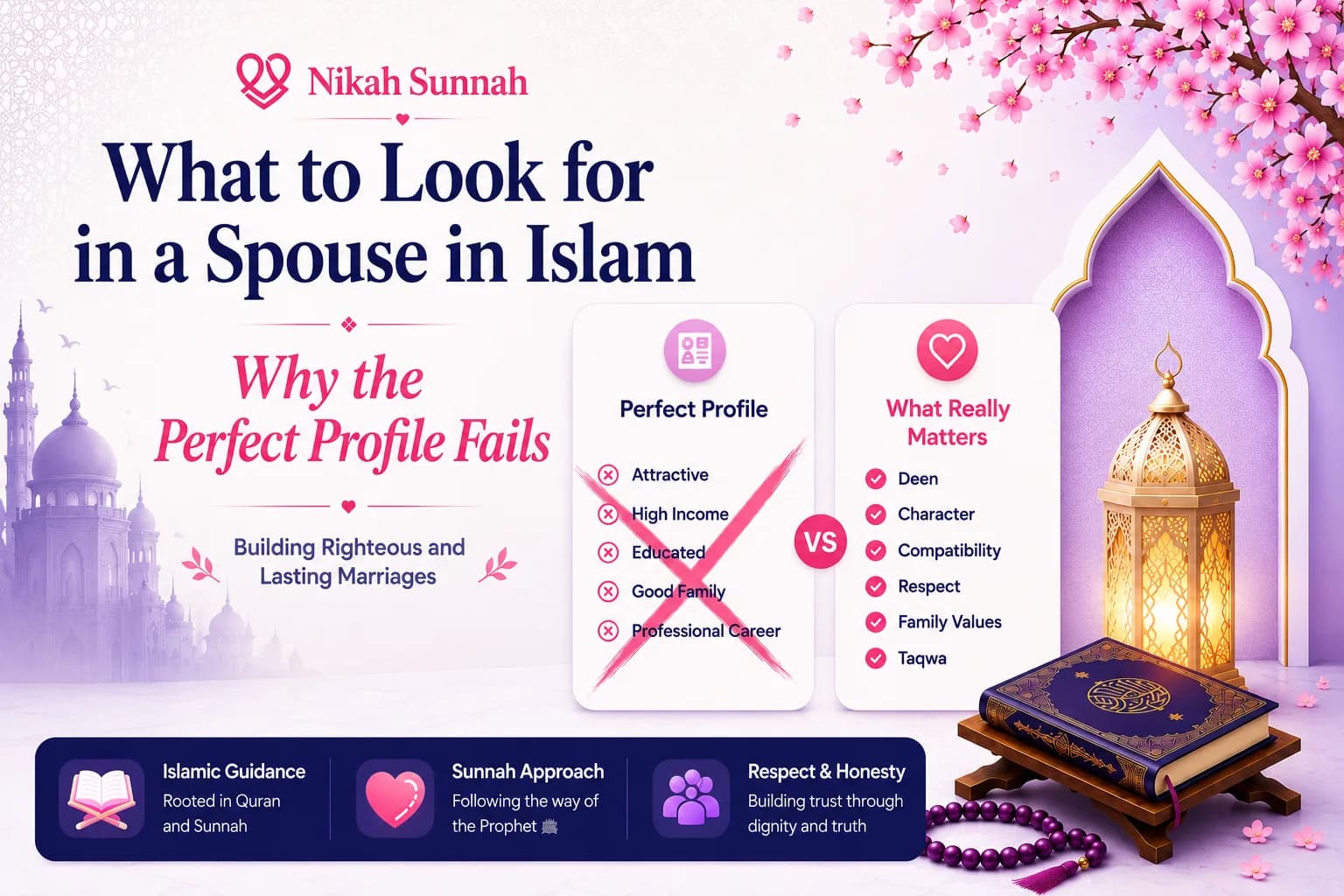
What to Look for in a Spouse in Islam: Why the Perfect Profile Fails
I've heard this story more times than I can count now. The profile comes through he's abroad, well-settled, the right degree, the right height, good family background. Or her profile comes through she's beautiful, writes about her qualifications, the family is well-respected. Calls are exchanged. Guardians are involved. Somewhere in the background you can hear families calculating whether this is finally the one.