The Islamic Way to Respond to Marriage Proposals: Why Silence Is Harmful
Why disappearing on someone who sought a life partner is more than just rude and what it says about us as a community. Understanding the core ethics of communication.

Saleha Bint Abood Al Amoodi
Contributor
In this article · 4 sections
If you have spent any time on a muslim matrimony platform, chances are you have either experienced this or witnessed it. Someone reaches out thoughtfully, introduces themselves, and waits. And waits. Days turn into weeks. Calls go unanswered. Follow-up messages vanish into the void. And then sometimes after a month or more a reply finally arrives: "We are not currently looking for a match." Or “we are not interested”.
This is ghosting. And in the context of matrimony where people are searching for something as significant as a life partner it is not a small thing. It is a quiet but very real failure of human decency when trying to figure out how to find a muslim spouse.
01. The Three Faces of Matrimony Ghosting:#
The disrespect of silence knows no boundaries when navigating modern networks or looking for a match on a muslim marriage site. It typically manifests in three distinct ways across profiles; men and women:
i] The Eternal Delay: The profile is active. The person is clearly online. Yet messages sit unread or worse, read and ignored. No reply. No acknowledgment. Just silence. Days pass. The waiting person sends a polite follow-up. Still nothing. This is not being "busy." This is a choice.
ii] The Disappearing Act Mid-Conversation: Things seem to be going well. Families have spoken. There is a real exchange happening about backgrounds, expectations, even timelines. And then, with no warning, the other person simply stops responding. No argument. No change of heart that is communicated. Just gone. The waiting person is left confused, replaying every conversation, wondering what went wrong.
iii] The Pre-Engagement Vanishing: Perhaps the most painful of all. Meetings have happened. Families have met. Dates have been discussed for the next step even an engagement. Everything, by all appearances, is settled. And then the person goes completely silent. For weeks. When they do resurface, the message is devastating: "My family has had second thoughts. We cannot proceed."
No warning. No conversation. Just a sudden full stop after weeks of false hope.
02 Why This Hurts More Than a Simple Rejection#
People often assume that ghosting is kinder than rejection that silence spares feelings. It does not. In fact, for many people, being ignored is significantly more damaging than a clear, honest "no."
When someone is rejected directly, they can grieve, process, and move forward. When someone is ghosted, they are left in a state of suspension not knowing whether to keep hoping, to stop trying, or to simply move on. They question themselves. They replay conversations, if their profile is the problem, if they are simply not good enough. The silence does not protect feelings. It creates wounds that take far longer to heal. It is a message and it says, "your time does not matter to me."
Beyond the emotional toll, ghosting wastes something precious time. People on a marriage apps are not browsing casually. They are looking for a partner to build an islamic marriage with.
03 The "Not Ready" Problem#
One pattern deserves special attention: profiles created by people who are simply not ready for marriage. Perhaps family pressure pushed them onto the platform. Perhaps they are "exploring" like a dating app without real intent. They are uncertain, and rather than address that uncertainty they simply go through the motions connecting, responding, encouraging until they can no longer maintain the pretense.
This is unfair to every person they interact with. A muslim matrimony platform is not a space to "figure out" whether you want to get married. It is a space for people who have already made that decision and are looking for the right person. Creating a profile when you are not genuinely ready is the first act of disrespect even before a single message is exchanged.
A Simple Ask:
If you are unsure whether you want to get married, that is completely valid but please do not create a matrimony profile until you have found your clarity. The people you interact with deserve that respect while they are investing time and effort in finding a compatible spouse.
04 What Good Etiquette Actually Looks Like#
No one expects instant replies or flawlessly worded responses. But the bar for basic human respect is not very high. For those striving toward a practising muslim spouse here is what it looks like in practice:
Acknowledge messages even if you need time. A simple "Thank you for reaching out, I'll respond properly soon" costs nothing and means everything.
Be honest early. If a profile is not the right fit after an initial look, say so gently. Do not let conversations develop for weeks before deciding the answer was always no.
Do not go silent mid-process. If something has changed family opinion, personal readiness, a new hesitation, communicate it. A difficult conversation is always better than unexplained silence.
Respect the weight of late-stage decisions. Once meetings have happened and both families are involved, walking away requires a proper explanation not a text after three weeks of no contact.
Reject with dignity. A "no" is never easy to give or receive but a clear, kind, timely rejection is one of the most respectful things you can offer someone.
Final Thought
The search for a life partner is one of the most significant journeys a person undertakes. It deserves honesty, care, and basic human courtesy at every step. We are not asking for perfection. We are asking for presence for the willingness to show up, communicate, and treat every person you encounter in this process as the real human being they are. Because someone, somewhere, is waiting for your reply.
Written by
Saleha Bint Abood Al Amoodi
Contributor
Involved in da'wah, study circles, and family counselling, with formal training in Islamic studies and ijazah in hadith. Contributes articles on marriage, personal development, and family life.
Marriage upon the Sunnah.
Without the noise.
Join families and seekers walking the same path. Verified profiles, wali-first, built around the Book and the Sunnah, not endless swiping.
No swiping · Wali-first · Free to register
More from the Sanctuary
Deeper guidance on the path to a Sunnah-rooted marriage.
Practical Guide
Background Checks Before Marriage in Islam: A Guide to Choosing the Right Spouse
What you are not checking on a marriage biodata format for Muslim seekers, but should. How to look past the formal living room behaviour.
Practical Guide
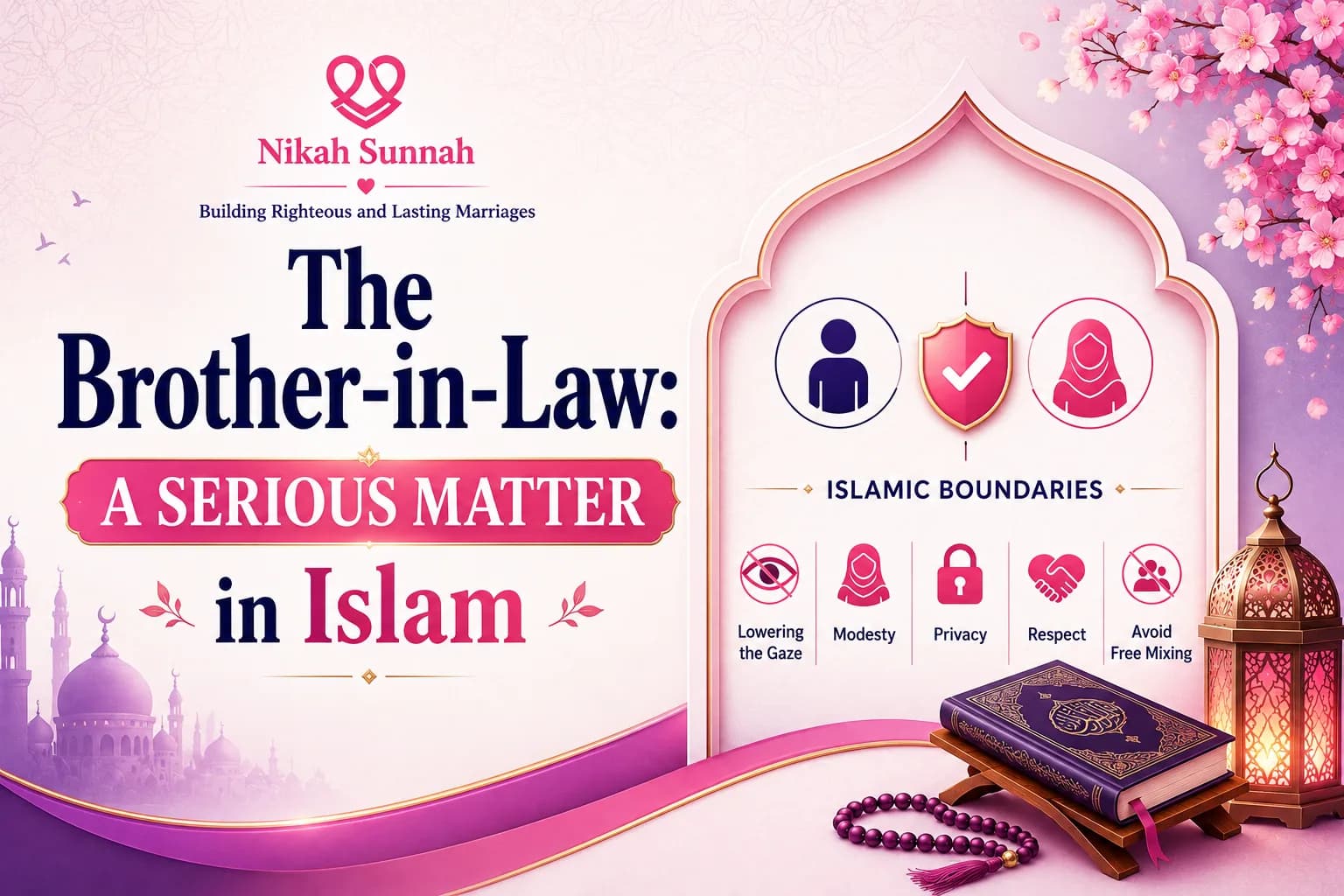
Brother-in-Law in Islam: Understanding Islamic Boundaries and Etiquette
"Treat him like your own brother." The "him" being the husband's brother.
Practical Guide
Why Involving Others in Your Marriage Can Do More Harm Than Good
A minor argument happens. Maybe he was short with you before leaving for work. Maybe there was a disagreement about money, or something to do with his family. Nothing serious just the kind of friction that is completely normal when two people are learning to share a life. But within the hour, the phone is out.